UTV Paddle Tyres: Conquer Sand Dunes Like Never Before

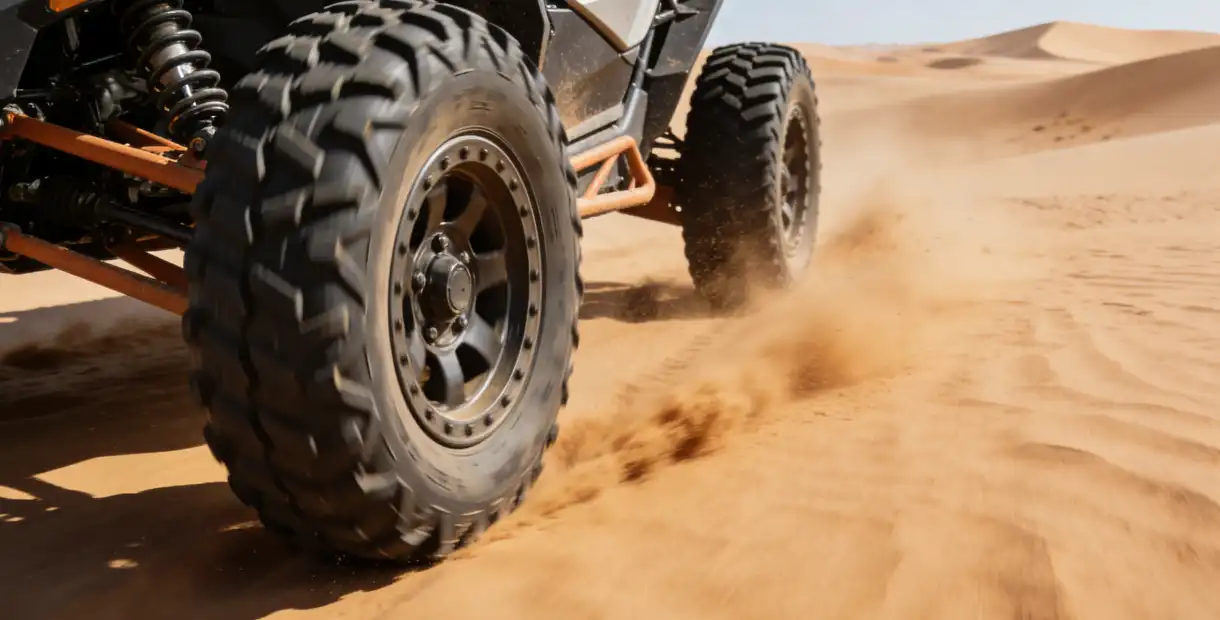
The enjoyment of sand dunes goes beyond their enchanting site as one takes a glimpse of the skyline. Also, the wonderful sight of the dunes rolling onto one another gives the chance to test the prowess of one’s machine. In this environment, the standard methodology of off-roading does not seem to work. Conventional off-road knobby tyres or all-terrain tyres do not work, because they dig, trench, and eventually fail. To cross the dunes would need a strong, purpose-built machine and the UTV paddle tyres would be the perfect match. Designed to maintain the stability of the vehicle while controlling and unleashing the utmost raw power. This guide focuses on the UTV paddle tyres . It discusses their UTV paddle tyres sand tyres . It's created by anyone who knows they need to install the UTV paddle tyres and dominate the dunes.
For inquiries about UTV paddle tyres and custom sand tyre solutions, contact us:
Email: info@excelindustryltd.com
WhatsApp : +86 15621053752
Website: www.excelindustryltd.com
Failure of Physics: The Disappearance of UTV Tyres in Sand
To appreciate why paddle tyres are so effective, you should first appreciate the sand. Deep, unconsolidated sand has the consistency of a free-flowing and shapeless liquid. A tyre in a deep sandy dune, for example, is devoid of the solid and stable purchase that is required for traction in order to facilitate a drive. A basic knobby or all-terrain tyre is made to penetrate. Its lugs are built and termed to sink into a consolidated dirt or a loamy terrain. However, the situation in this particular case is the sand, and that is a counterproductive design.
The tyre lugs do not reach a firm base and instead begin acting as miniature diggers, vigorously shoveling the sand from underneath the tyre in the process of trying to move the vehicle forward. This action, albeit forward, results in a deepening hole under the center of the vehicle, which, in this case, is a UTV. With every moment, the vehicle is sinking deeper and deeper into the loose sand, until the frame and the skid plates of the sand sinking provide no more space, thus stopping all forward motion. This, in turn, makes the engine use all of its power in an ultimately wasted effort of digging sand and trying to get momentum while. All in all, the driver is left infuriated with a fully stuck vehicle. Although, these paddle tyres do solve the basic core physics problem.
Anatomy of the Rear UTV Paddle Tyre: The Engine of the Dunes
When it comes to moving UTVs in the sand, power and acceleration the tyres do not get anymore powerful and accelerative than the rear paddle tyre . It captures the objective of paddle wheel design, but from the UTV perspective. It scoops sand and not water, but a comparable principle is applied. The rear tyre form is a protective shell. It is a sled over a surface and radical in cross section. Take a slice at the tyre and the cross section lies between a triangle and a supper slice. With sand to the rear elevation, the contrail is a twisted vertical slits of glass. It is a great degree of advance and rainbow in the air. The potholes of glass are from blunt vertical appendages. With them tipped to the UTV, the contrail is flatter. These squaricles are at the tip of the blunt appendages. With these appendages, a scoop action derives from thimble frosted cups. All the stealth of a supertanker in neutral in the cup of a giant spout. These appendages are the paddles of the tyre. First, we breakdown scoop action, then we’ll count the paddles and finally their design.
The Power of the Paddle: Count, Depth, and Shape
The height, angle, shape, and number are the paddles critical to the performance of the UTV. These factors are factors of engineering, not design.
The amount of paddles on a tyre is a key parameter to determine performance of a UTV. A tyre can have paddles as few as 14 or as many as 30. 14, 16 or 30 paddle tyres must be matched to the UTV's engine power and drive train. A naturally aspirated UTV is low powered and needs less paddles. This allows the engine to spin the tyre freely and get to the optimal powerband without bogging down. This is opposite for a Polaris RZR Pro R and a Can-Am Maverick X3. These high powered turbocharged machines require a much paddle count. The additional paddles are required to harness the engine torque to power, and not dramatic wheels spin.
The shape of the paddle is also a factor to consider. There are two major types of paddles. Straight paddles or comp cut or hauler paddles run across the face of a tyre. This design has the straight line maximum bite of a tyre. It is most used in sand drag racing or any racing. It is also used in straight up the hill climbing competitions. This paddle focuses on the drive and has less grip for the corners.
Paddles tyres designed with V-shaped or staggered paddles are much more enjoyable and versatile for recreational dune riding . In this case the paddles are arranged in a V or chevron pattern. This design still maintains excellent forward propulsion. On the other hand, the angle of the paddles also generates a considerable degree of side bite. This enables a driver to steer a UTV into corners, making it possible to cut through the enormous bowls of the dunes with improved stability and control. A V-paddle design for the majority of UTV duners provides the best and most balanced performance in the duners market.
The Carcass: Light, Flexible and Adaptable for Optimal Flotation
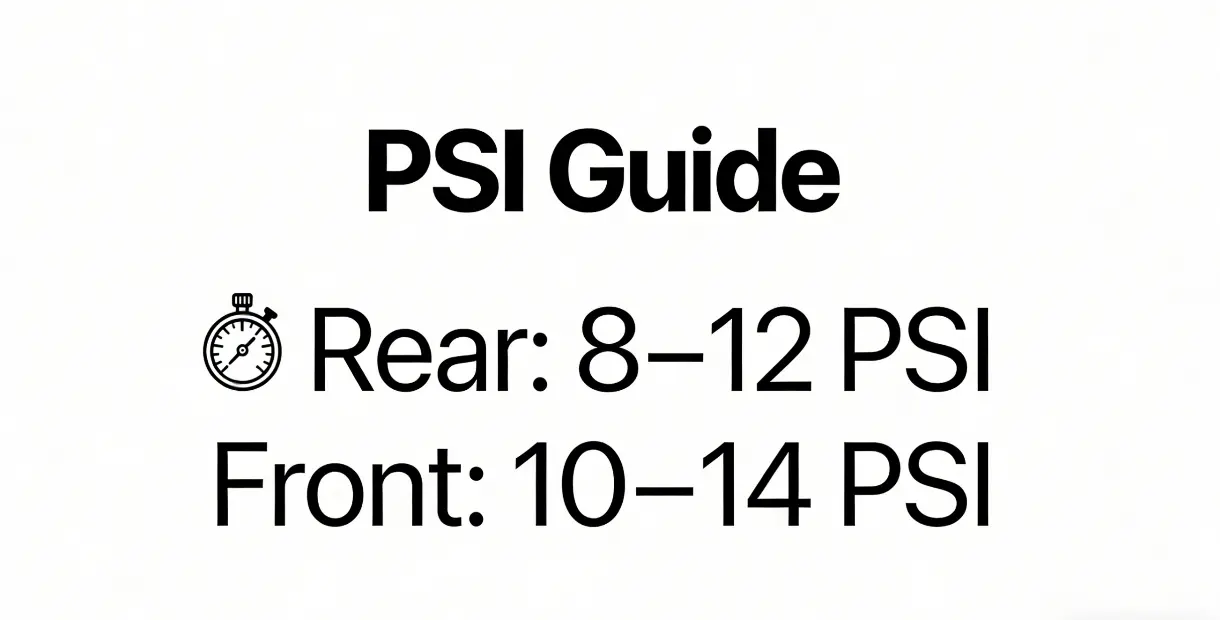
The carcass of a UTV paddle tyre is also greatly specialized. It has to be engineered to be extremely light and flexible, unencumbered in movement. This performance trait is vital, its the reason a tyre flattens at low air pressures, landing a broader and longer footprint on sand. This is important, as it helps distribute the considerable weight of the UTV across a much wider surface for improved flotation . This is the reason the machine is able to stay on the soft sand.
The lightweight construction also lessens the rotating mass of the tyre which also reflects positively on performance. A tyre with less mass is easier to spin which yields faster acceleration and an overall better throttle response. There is also a less amount of strain placed on your UTV’s clutch, belts, and axles.
The Rudder of the Ship: Understanding the Front UTV Sand Tyre
The rear paddle tyres deliver the raw, explosive power whereas the front sand tyres , in contrast, serve the important function of control and steering. A frequent and dangerous mistake is to use your stock front knobby or all-terrain tyres in the sand. The sharp lugs of these tyres are designed to penetrate the ground. When in the sand, the front wheels do bite in and consequently get pulled under level which is referred to as “knife” or “plow,” which is a large loss of control and can lead to a ski or tumble. Specialized front sand tyres serve to avoid these by promoting flotation and rejecting cloud steering.
The Ribbed Front: For Precision Steering
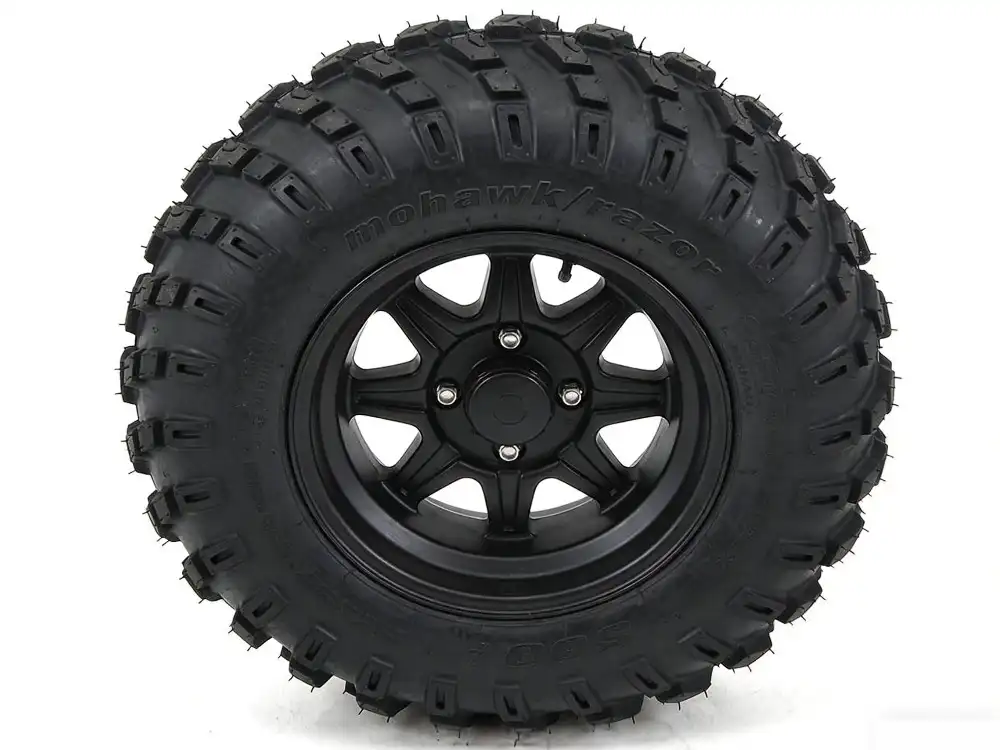
The most popular and versatile type of front sand tyre features one of more pronounced ribs that run along the center. This design is often referred to as a "mohawk" or "razor" type tyre. These elevated ribs behave as semicircular rudders in the sand. They provide a distinctly defined edge for the tyre to track on. This enables the driver to feel a much greater sense of steering precision and directional stability. It allows them to confidently initiate turns. Moreover, it enables them to carve smooth, predictable arcs across the face of a massive dune. For general-purpose dune riding, where cornering and control are priorities, a ribbed front tyre is the superior and safer option.
The ‘Smoothie’ Front: As Little Drag As Possible
The "Smoothie" is the alternative option for a front sand tyre . It is a fully bald tyre. It is devoid of tread, knobs, and ribs. Its singular aim is to achieve the highest possible flotation and the lowest possible drag . By presenting a smooth, uninterrupted surface, it slides without resistance on top of the sand. It is therefore the tyre of choice for uncompromising sand drag racers . Every competitor knows that minimizing drag is the fastest route to victory. The main downside to a smoothie is a marked reduction in steering feel and precision. The front end can feel vague and tends to wander, especially at lower speeds.
The Art of the Match: Selecting Appropriate Paddle Tyres for Your UTV
Your choice of paddle tyres for your UTV is a critical component of the entyre setup, your most important decision for the dune machine.
Getting it wrong will only serve to frustrate you with a tyres setup for a less than optimal experience. The correct tyres will dramatically change the experience with the machine, transforming it to a more responsive, powerful, and capable UTV. Selecting the correct tyres for the UTV involves analyzing the dune's power and your driving style along with the specifics of the dunes you intend to ride in.
Matching Paddle Count to Engine Power
The output of your engine and the paddle count on the rear tyres must be correct otherwise a mismatch will greatly reduce the setup's potential.
Naturally Aspirated UTVs: e.g. Polaris General, Kawasaki Teryx.


Send us an inquiry and our sales team will reply within one business day
Contact Us