Breaking Down The Price Of Golf Cart Tires

Understanding golf cart tires can be a journey full of surprises. A single tire can cost anywhere between the price of a family dinner, to the price of a high-end electronic device, and these prices are not arbitrary. Instead, these prices depend on Technology, Materials, Size, and Purpose. Throughout these factors, one thing remains clear: investment performance. This is why it is important to analyze the provided factors and determine the investment performance. This guide will simplify the price of golf cart tires and outline every factor. Become a prepared and confident buyer, for the journey to finding the right price-value ratio is about to begin.
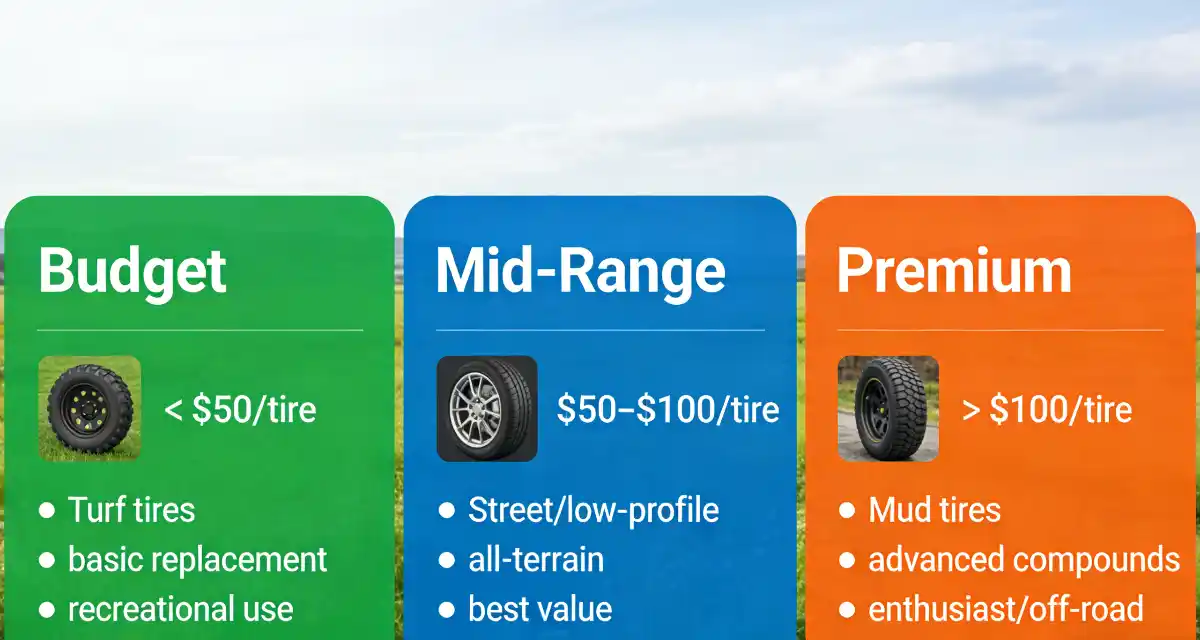
There are three broad levels to the price of golf tires, every tier serving a different class of owner and purpose. Knowing where you belong will drastically help narrow down the search.
To begin with, we have the budget-friendly category. These tires usually sell for less than $50 per tire. This range is populated with standard-sized turf tires . These are the exact turf replacements for the factory-installed rubber. Some basic smaller-sized all terrain tires could also be found. This is the ideal price range for recreational users. It is for someone who just needs tires that work and tires that are not a safety hazard.
Next is the very much sought tier. The range of prices here for tires is usually from $50 to $100 per tire. This segment provides a tremendous assortment. You will find excellent quality street and low profile tires . In addition, this is the mecca for many all terrain tires . Larger sizes and more recognized brands start to surface. This tier offers most owners of golf carts the best value. It provides a marvelous improvement in performance and style.
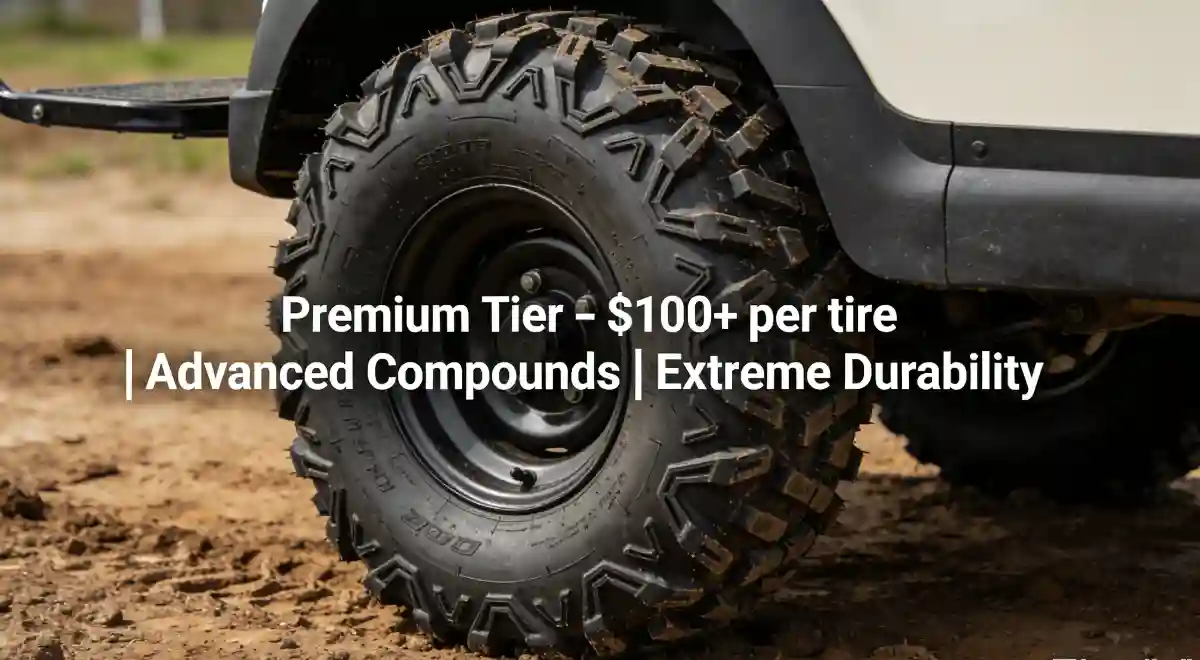
Lastly, we look at the premium performance tier. These tires have price points which go beyond $100. This range contains the most specialized and toughest products available. Large, aggressive mud tires are the favorites in this category. They include tires with advanced rubber compounds from the most reputable manufacturers. This range is meant for enthusiasts at the top of the peak. They cater to those who expect nothing less than the best performance for off-road and on-road driving.
Factor 1: The Tire Type and Its Direct Impact on Cost
Costs is on a scale from 1-10 the greatest influencer to a tire's price and what the tire is used for. The features of the tire such as the tread pattern and the extra parts have a strong influence on the production costs. Specialized tires are more expensive because they use more advanced molds and materials.
To start with, turf tires are the baseline for pricing. They are the cheapest tires available on the market. Their construction is basic. They have shallow treads and a hard rubber compound. This enables them to be produced easily and cheaply. They serve their purpose intended for use on a golf course. Their performance in other areas, however, is very limited. If you are in need of a basic replacement, these tires provide the cheapest option. Their price equals a narrow, concentrated purpose and design.
Street and Low-Profile Tires: A Mid-Range Investment
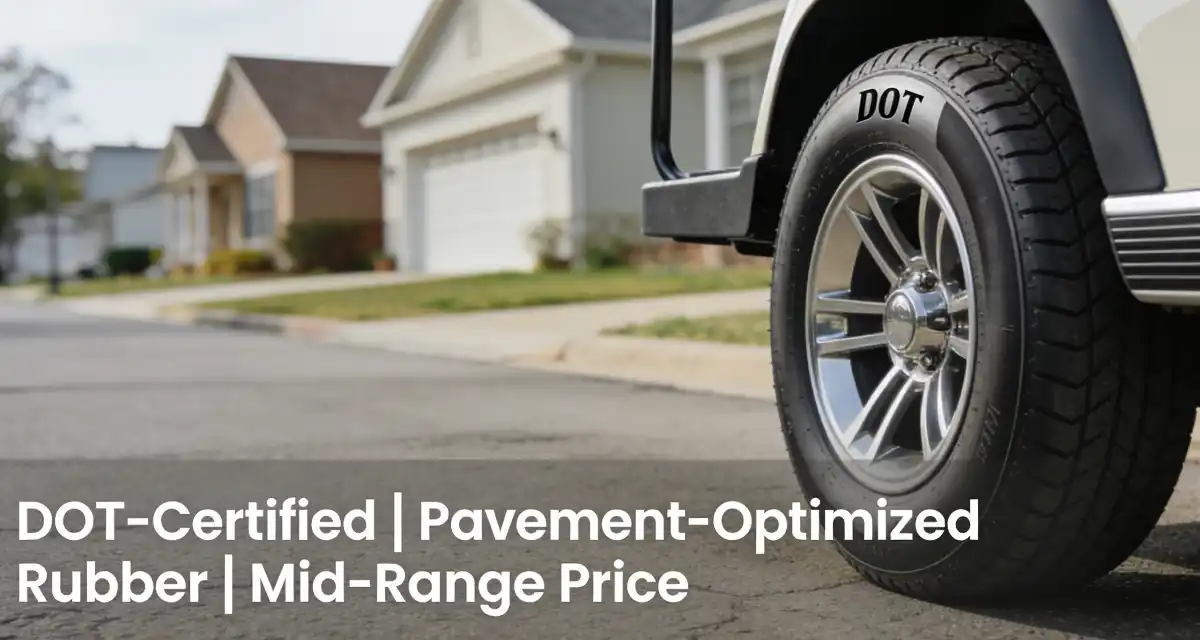
Street-oriented low-profile tires remain firmly within the mid-range tier. Their price is higher than a turf tire for various reasons. There are many tires that incorporate advanced rubber compounds designed for more grip and durability on pavement. Many are DOT-approved . The process of acquiring this certification involves more steps and thus more costs. Their patent short sidewall is more aesthetically pleasing and performs better on the road; hence, higher pricing.
All-Terrain Tires: The Versatile Value Proposition
All-terrain tires cover a wide price range. They usually start from the lower-mid tier and can reach as far as the premium tier of pricing. Their price is directly impacted in part due to the more complex tread patterns. These deep, interlocking lugs are more expensive to manufacture due to the increase in rubber. Many all-terrain tires are tougher due to higher ply ratings for better puncture resistance. Buying an all-terrain tire is an investment in versatility, the price of having a single tire that performs well in many different situations.
Aggressive Mud Tires: The Premium Off-Road Choice
When it comes to tires, Mud tires tend to be the most expensive option out there and are considered to be in the premium price bracket. The price associated with the Mud tires is based on the unique design that comes with it, which requires a lot of rubber to develop the deep lugs. Their construction is incredibly robust and are built with the highest ply ratings for maximum durability. The research and development required to design an effective self-cleaning tread also adds to the cost. This proves the point that the price of the Mud tires is justified for the demanding conditions they will handle.
Factor 2: How Size Directly Correlates with Price
When it comes to the physical size of a tire, there is a simple and direct relationship with the price. Mud tires with larger diameters are more expensive, just like all other types of tires – as more unique materials are required to develop them. This is a universal principle and applies to all tire types and tread patterns.
The initial option* A standard 1-inch turf tire* is always going to be the cheapest. As the size increases the price increases as well. A 20-inch all-terrain tire is going to be more expensive than an 18-inch tire. A 23-inch version is going to be more expensive than the previous mentioned 23-inch tire. The price difference can get quite high. A few inches in height can result in an additional 20-30 dollars per tire.
The width of the tire also plays an important part. A wider tire uses more rubber. With more rubber there is better traction. A 22x11-10 tire is more expensive than a 22x8-10 tire. The additional 3 inches of width increases the material used which increases the cost. The fundamental rule of tire pricing is that bigger is more expensive.
Factor 3: Brand reputation and advanced technology
The brand name on the sidewall of a tire is a notable price driver. Reputable brand names tend to be more expensive and that pricing is the result of the name as well as the development and quality control behind that tire.
Leading brands must invest their entire focus and budget in technology for their brand ITP, Maxxis, and Carlisle. These in-house brands also do similar work. They pull off proprietary work like modeling and designing optimal tread patterns. They adhere to high production and work standards. These practices result in improved tire quality in terms of performance durability and consistency. These brands are a proven example of quality and engineering, and as a result, are sold at a premium price.
There is a consumer packaged brand which does not invest a lot like remaining brands mentioned. These are not hard to pull off, and their price is much more competitive. These practices are acceptable for a normal user. They offer basic rubber compounds and unquestionable short term durability. These practices are a trade off that is acceptable. Reviews are critical when deliberating these brands for consideration. More often than not promotion imaged lower priced products which do not justify a proven performance.
Factor 4: The Secret Ply Rating Strength
The construction factors in expense alongside durability. The construction’s most common sign of internal strength is called ply rating . It diplomatically describes a tire’s toughness in case of puncture. The more internal strength the ply rating describes, the higher the price.
A 4-ply tire is most common in general use. It strikes an optimal blend of comfort and durability. The sidewalls have a high degree of flexibility in construction. This lets the tire take in some of the bumps.
A 6-ply tire is a noticeable upgrade. The casing is considerably stronger. This added strength can withstand more punctures from rocks, thorns, or anything else that might damage a tire off the beaten path. With that added durability and capability, comes a price. This is most preferred in off road and all-terrain dynamics.
The best of the best in durability is an 8-ply tire. Such tires endure the harshest of the harsh. These tires commonly reside on rugged rock crawling vehicles or heavy-duty utility vehicles. The price shows the extreme toughness and defense against punctures. When price comparing, the ply rating should always be verified. A tire that is lower in price could be classified as a deal. However, if the tire has a lower ply rating, it cannot be compared.
The Added Value of DOT Approval
More and more golf cart owners want to be legal on the street. Many neighborhoods and communities allow golf carts to be driven on the main road. As street legal, these carts need to have tires that are dot approved . The DOT symbol on the side of a tire shows that it passes the Department Of Transportation’s requirements for highway use.
It is expensive and rigorous for a manufacturer to get a tire DOT certified . The tire goes through a lot of testing. This includes analyzing the tire for performance and speed and safety. The consumer pays the cost of the certification. Therefore, a DOT certified street tire will always cost more than a non DOT tire of the same size. The additional cost is to for pay for legal compliance and certification. This is also for the peace of mind. If you want to drive the cart on the street, you need to pay the additional cost.




Send us an inquiry and our sales team will reply within one business day
Contact Us