Studded ATV Tyres: Unstoppable Ice Traction
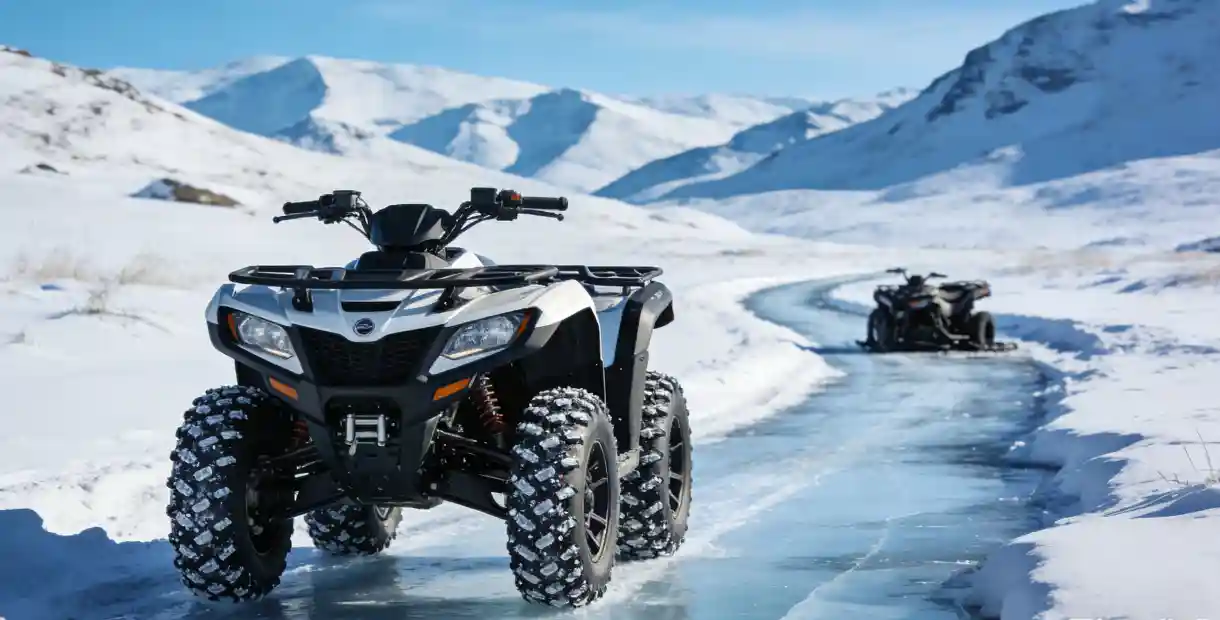
It’s wintertime. The delightful trails of yore have become a spiky, hazardous region, shifting the ATVing season to a sudden, freezing pause. Your mighty all-terrain vehicle rests dormant, not because of dirt or those pesky rocks, but a sad, merciless sheet of ice. Conventional tyres are a lost cause on this low friction surface. Yet for those with wisdom and preparation, winter is not a demotivating end, but a fresh start loaded with thrills. Enter Studded ATV Tyres . This modern piece of technology is, on its own, a monumental piece of engineering prowess. More than that, it stands proudly as a testament to one’s dominance over every season. This guide is about one thing: studded tyres . It will serve as your all-in-one instructional guide to turning your ATV into a savage beast ready to take on anything, including winter.
The Physics of Failure: The Problem With Standard Tyres on Ice
In order to understand the genius of the studded tyre , first, appreciate the ingenuity of its enemy. Ice is a surface like no other, profoundly unique, and full of challenges. Its coefficient of friction is incredibly low. A standard ATV tyre uses its rubber compound, along with its tread pattern, to generate grip. On dirt, the lugs dig in. On rock, the rubber conforms. However, ice is an exception.
A regular knobby tyre is unable to penetrate the hard, frozen surface as its lugs “skate” on the surface. There is no rubber compound combination, no matter how soft, that can bond to a microscopic surface. Thus, an almost complete absence of traction is created. As a result, in an attempt to accelerate, there is a futile exercise in wheelspin, while braking leads to a long and uncontrolled slide. When steering, inputs are met with a lack of response. What was once a powerful ATV is now a “helpless” and unpredictable sled. The physics of a studded tyre solves this problem. It does so by providing powerful mechanical grip .
The Components of an Ice King: The Engineering of an Ice King Studded Tyre
Studded tyres are a complex piece of machinery. The marriage of a select tyre and a series of strong metal studs is an engineering marvel. It is not a case of just putting spikes onto any tyre. Everything is meticulously crafted and designed to work as one. The amount of traction one achieves on an icy surface is tremendous. The only way to understand such feats of engineering is to understand each and every single part of it.
The Host Tyre: The most Important Part of the System
The tyre is the most important part of the system and is thus referred to as the “host tyre.” It goes without saying that not every ATV tyre can be used for studding. For a tyre to be used as a studding host, it must meet a number of important requirements. It must be able to accommodate a tread pattern with strong, well-defined lugs that possesses a certain depth. The rubber used must be a firm one. A soft, gummy rubber will not be able to hold studs in place as a tyre accelerates and brakes. Even the tyre’s carcass needs to be thick enough in order to withstand the pressure created by the studs.
The Studs: The Claws of the System
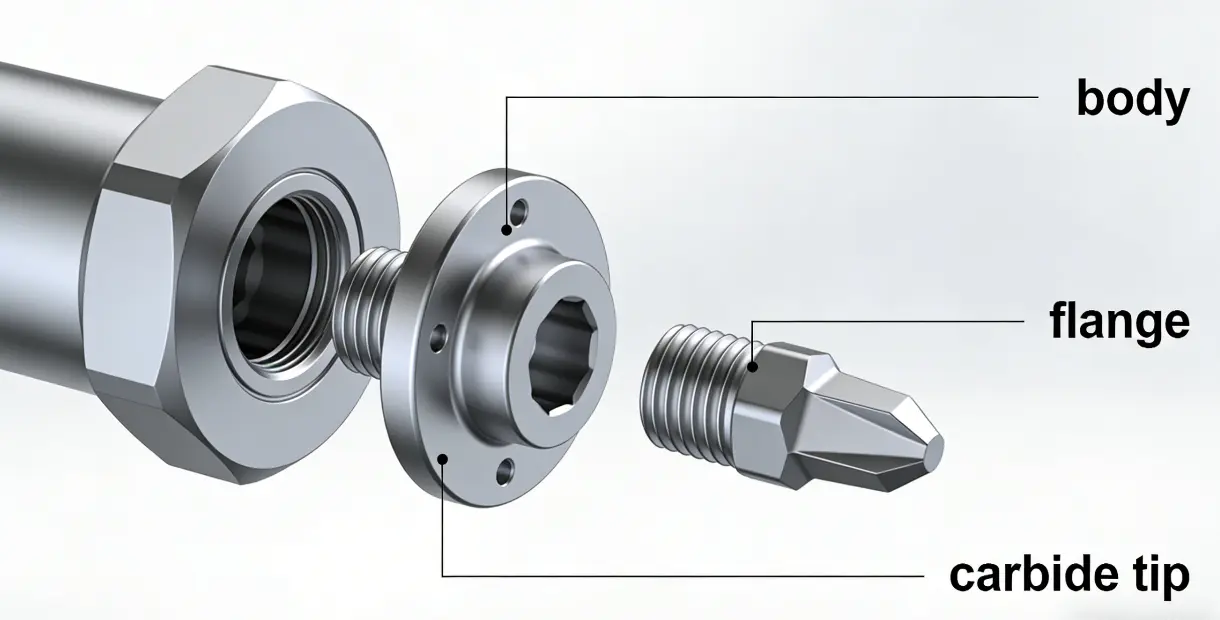
The studs are the core of a tyre’s performance on ice. These small metal objects are remarkable. A regular stud consists of two fundamental parts. The body of the stud is a tough metal, either steel or aluminum, which provides the stud’s core power. But the real tip is where the magic is, the tip is made from a highly regarded, tough, and resistant material almost always tungsten carbide . This is the same extremely tough material utilized in industrial cutting and armor-piercing munitions.
As the tyre spins, these tungsten carbide tips are like a cluster of tiny claws, penetrating ice. It establishes a strong and absolute mechanistic engagement between the tyre and the ice, which, in turn, pierces the ice. This ice penetration is what gives the immense grip exercised on the ground. It is quite a simplistic and painfully effective rule.
Two Paths to Dominance: Pre-Studded vs. DIY Installation
There are two primary ways to acquire a set of studded ATV tyres . You can purchase a set that comes pre-studded from the factory . Alternatively, you can take on the challenge of installing the studs yourself . Each path has its own distinct set of advantages and considerations. The right choice depends on your budget, your mechanical skill, and your specific performance goals.
The Pre-Studded Option: The Path of Convenience
A pre-studded tyre is the most simple and direct answer. These tyres are sold by the manufacturer as a standalone, ready to mount tyre and stud system. The two components are designed in the factory to function as a system, and as such, they are engineered to work in perfect harmony.
There is a fundamental positive of any pre studded tyre, and that is convenience. You do not have to do any of the work and it is done for you. You can take assurance that while you have no trouble mounting the tyre, the engineers have done the stud placement in a way that optimizes the balance of traction and handling.
There is a truth that can be stated, and that is the studs are installed with professional equipment which guarantees that the fit is tight and consistent. Further, it is not uncommon for tyres to be sold with a manufacturer’s warranty.
Disadvantages: A pre-studded tyre generally has one major disadvantage: A lack of customization. Any pre-studded tyre will more than likely have a generous design out of multiple stud types, and also have a prescribed stud pattern. In addition, these types of tyres will usually have a loftier buying cost than a DIY setup.
The DIY Option: The Ultimate Customization Path
The DIY option always provides the highest level of control and customization possible. It will help you minimalist and design any off-trail tyre into an ice-crushing tyre. For these kinds of people, more about the journey of doing the above works than the outcome of the final machine.
Advantages: The DIY option offers the highest level of customization. You can decide and choose which host tyre you would prefer. You can choose the type and length of the stud. You can also arrange the stud pattern. All of these can help you have a desired tyre for your location. If you have a DIY tyre setup, this option will be more economical for you more than often.
Disadvantages: Going down the DIY route requires a lot more time and effort as it involves a more complicated and precise installation process that presents a chance for damaging the tyre if the studs are added incorrectly. In addition, having studs added to a tyre will nearly always void the manufacturer's warranty.
Understanding the Stud
In the case of DIYers, it is important to know that not all studs are the same. Studs come in a variety of types, materials, and sizes. It is important to choose the right stud for a safe and effective installation.
Understanding the Constituents of High Performance Stud
Most modern day off-road studs are made of three main parts. The body gives the stud it’s main structure. The flange is the bottom wide part of the stud. This is the part that sits in the rubber lug and holds the stud in place so that it doesn’t get pulled out. The carbide tip is the sharp end that is able to grip the ice.
Common Types of ATV Studs
There are multiple types of studs that can be fixed on ATV tyres. Most types of ATV studs are equipped with screws. All that is required is using a standard cordless drill with a special bit. Most ATV owners prefer this type of stud because their installation is not permanent. Users have the option to remove the screws at the end of the season. Another popular type is the push-through stud. Unlike screw-in studs, push-through studs do not allow screws to be extracted and are considered more permanent. Gun-installed studs are used mostly in professional shops, where they are fixed with a special pneumatic stud-gun.
What happens when you use studs of different lengths?
Choosing the proper size of studs to use is the most important consideration of the entyre studding process. A stud must be matched to the lug depth of the of the host tyre perfectly. A stud that is too short doesn’t protrude enough from the tyre to properly penetrate and grip the ice. A stud that is too long is much more dangerous. It can bend and fold over under weight. It can also get ripped out of the lug, which can severely damage the tyre. The general guideline is, when fully seated, a stud should protrude from the tread by a certain specific amount, which is best to be confirmed from the stud manufacturer's guidelines.



Send us an inquiry and our sales team will reply within one business day
Contact Us