Sand Tires: The Comprehensive Guide for Sand Dune Riding
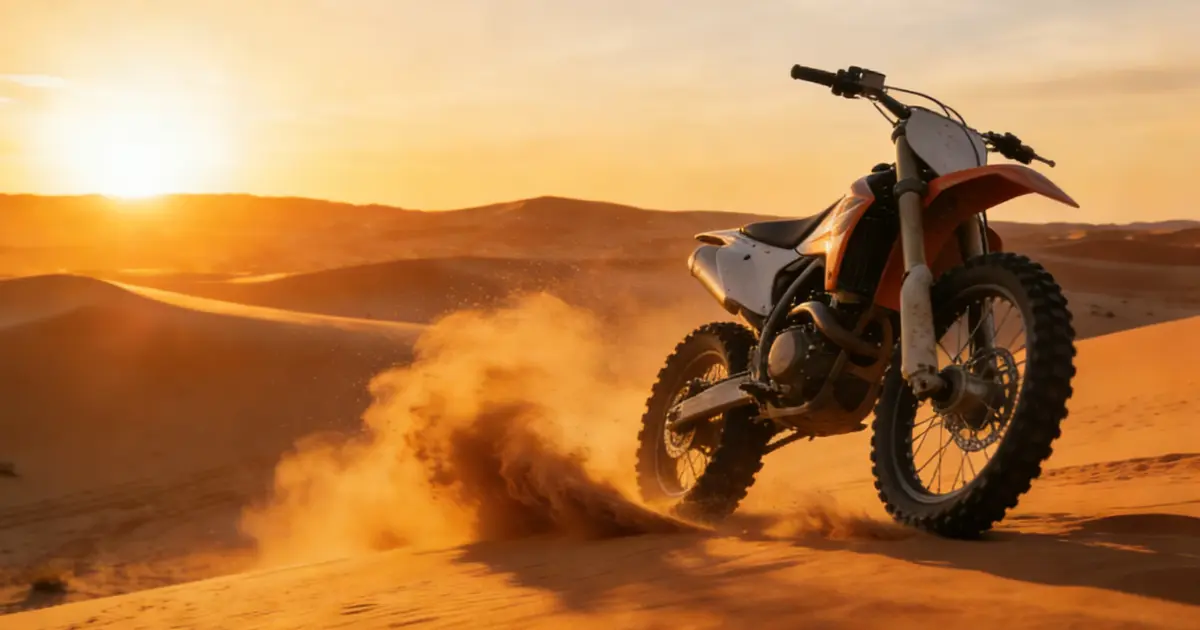
Deep sand and shifting can't stop the blend of motorcycle and rider in capturing the "otherworldly" oil and water experience. Riding along the water’s edge and doing figure eights in the sand along the shoreline creates the powerful rush of relying on both you and the machine. However standard sand riding isn’t that easy and can actually cause ruptures and blown rims. The most important piece of hardware that avoids equipment failure would be specialized sand motorcycle tires . Most people mistakenly think that they are simply modified ‘knobbys’ for more flotation. In reality they were made specifically for transforming a sand wasteland to a playground filled with high traction to perform acrobatic masteries to the machines limits. This guide will go into detail to explain the use and the importance these tires offer. Any proficient dune rider will know the glow of these tires on the bike will illuminate it to the ‘ultimate’ experience.
For inquiries about sand tires , customization, or purchasing, contact us :
Phone: +86 15621053752
Email: info@excelindustryltd.com
Website: www.excelindustryltd.com
Social Media: Linkedin
The Physics of Sand Riding: Why Standard Knobbies Fail
The sand itself is the first thing you need to comprehend in order to appreciate the need for sand tires . Deep dry sand does not behave like solid ground. It acts more like a fluid. When the standard knobby tires spin, the knobs on the tires try to dig down in the belt but end up just excavating the loose material. They do not gain any traction in able to drive a motorcycle forward. Instead, they create a deep trench which ends up making the motorcycle slow down, sink, and get stuck. The forward motion is halted and all the energy from the motorcycle ends up getting wasted as it sinks deeper and deeper into the ground.
Winning in the sand requires a totally different strategy. The target is no longer digging for traction, but achieving something called flotation or “planing” which is skimming over the surface of the sand. The motorcycle should be able to rise up and glide over the surface just like a speedboat does on the water. For that, you need a tool that is able to create lift and forward motion in a loose sand. A standard knobby tire is able to create penetration on intermediate or hard terrain. What in the sand is the opposite of what is needed. It is the specialized sand tire that has the unique capability to solve this problem.
Understanding the Rear Paddle Tire of the Dune Machine
Arguably the most important tire in the entire world of sand dune riding , the rear paddle tire exemplifies the very reason any machine was built to traverse the dunes. The stunning, deep physical attributes of this tire are a prime example of engineering for use. There are no construction tread blocks. Instead, there is a series of massive scoops, also called paddles , that capture sand and throw it far with tremendous furious speed and force. It is a tire that is able to exceed the speed of a sand dune motorbike. Understanding why it works so profoundly starts with the anatomy of this paddle tire.
Paddle Anatomy: Paddles per Tire, Tire Depth, and Overall Design
Resting fairly high from the rubbered tire, the paddles are the most important feature in the rear tire paddle, and perhaps the most important rubber component to the entire dune riding world. There are a number of soft paddles that are the umbilical cords to the very effective system of this rear tire. All the soft paddled ribs are strategically placed, and the splitting of these ribs to create paddles is an engineering mastery. Every paddle is placed so that they are able to capture sand, and the entire motor system able to transfer is an extremely simplistic and effective system.
The number of paddles attached to a tire is one of its most important features. The paddles may number eight, ten, twelve, or even more. This is not a random number. The proper paddle count directly corresponds to the engine displacement and power output of the motorcycle. Lower-powered bikes require fewer paddles to permit the engine to freely spin the tire. In contrast, a high-powered machine require more paddles in order to effectively utilize its massive torque. The ability to match the paddle count to the bike is needed in order to achieve optimum performance.
Vulcanized vs. Molded Paddles: A Key Distinction
There are two distinct ways of making a paddle tire. The first and more traditional way involves vulcanizing paddles onto the bald tire carcass. This process begins by taking any standard motorcycle tire, having the tread buffed completely smooth. By taking the tire and pre-formed rubber paddles, the two are combined chemically using heat to form a paddle tire. The vulcanized process may pose a greater risk of the paddle tearing off the tire, but it has a higher degree of customization.
Most people today use fully molded tires . A single piece tire, paddles, and carcass, made in a mold. All in one piece. The construction is far more reliable and durable. The paddles won't delaminate from being integral to the rest of the tire. Molded tires perform better in terms of ‘overall performance.' The paddles in terms of shape, spacing, and angles are engineered and repeatable.
The rubber compound and inside making of a sand tire is also specialized. Unlike a street tire, a sand tire doesn't need to rely on a sticky compound to chemically grip. Rubber compound is designed and made to be durable. It shouldn't be able to be torn apart from the abrasive nature of sand.
The internal structure of a tire is referred to as a carcass . A tire carcass is made lightweight and flexible. The flexibility of a tire is a key tire construction feature. Without flexibility, a tire is unable to fully deflate and splaying across a surface. A tire will create a elongated and broad impression on a surface when it has flexibility. The more broad a tire is, the more the weight of a motorcycle is evenly distributed. Thus, flotation on the surface is improved and the motorcycle will not sink as easily. The lightweight construction is beneficial for the bike, as it reduces "unsprung weight."
Choosing: Paddle tires and Tire Overview
The most difficult decision when equipping a dune bike. is the type of paddle tire to use. Even the slightest wrong decision will result in problems and frustration. However, the correct paddle tire will make a bike feel as though it has an added twenty horsepower. The bike tire paddle has to somewhat correspond to the bike tire paddle to the bike.
Power to the Paddle: Selecting the Correct Paddle Count
Matching the paddle count to the engine's power output is critical. Under or over paddling a combi tire will impact engine performance. On a small-bore bike, a tire with too many paddles will over-stress the engine and it will not have enough power to spin the tire, which will cause it to stall and feel sluggish. On the other hand, on a powerful bike, a tire with too few paddles will cause overexcessive wheelspin, which results in a the engine power wasted in a huge rooster tail of sand.
A few rules of thumb:
Dual 125cc 2 Strokes and 250cc 4 Strokes: A tire with 6 to 8 paddles is typical.
250cc 2 Strokes and Dual 450cc 4 Strokes: A tire with 8 to 10 paddles work best.
For Dual 500cc 2 Strokes and high power Machines: Large displacement or turbocharged bikes require 10, 12, or even 14 paddles to transfer their immense power to the sand.
The Shape of Speed: V and Straight Paddles
The orientation of the paddles also impacts the handling of the tire. There are two basic designs: straight paddles and V-shaped paddles . Straight paddles are set across the face of the tire and run along the tire at a 90-degree angle. This design gives the maximum forward drive possible in a straight line. These are called "comp cut" or "hauler" tires and are selected for sand drag racing and pure hill climbing. Their disadvantage is a considerable loss of grip for cornering.
For all around dune riding, a tire with V-shaped or staggered paddles is a much better option. In this tire design, the paddles are set at a chevron or V angle. This design still offers very good forward drive, but the angled design offers some side bite. This design allows the rider to lean the motorcycle to the side and cut tighter in the corners with much better control. The majority of duners thinking of having fun would prefer a V-paddle tire design.


Send us an inquiry and our sales team will reply within one business day
Contact Us