Quad Paddle Tires 2025: The Ultimate Guide to Thrillingly Dominating the Dunes

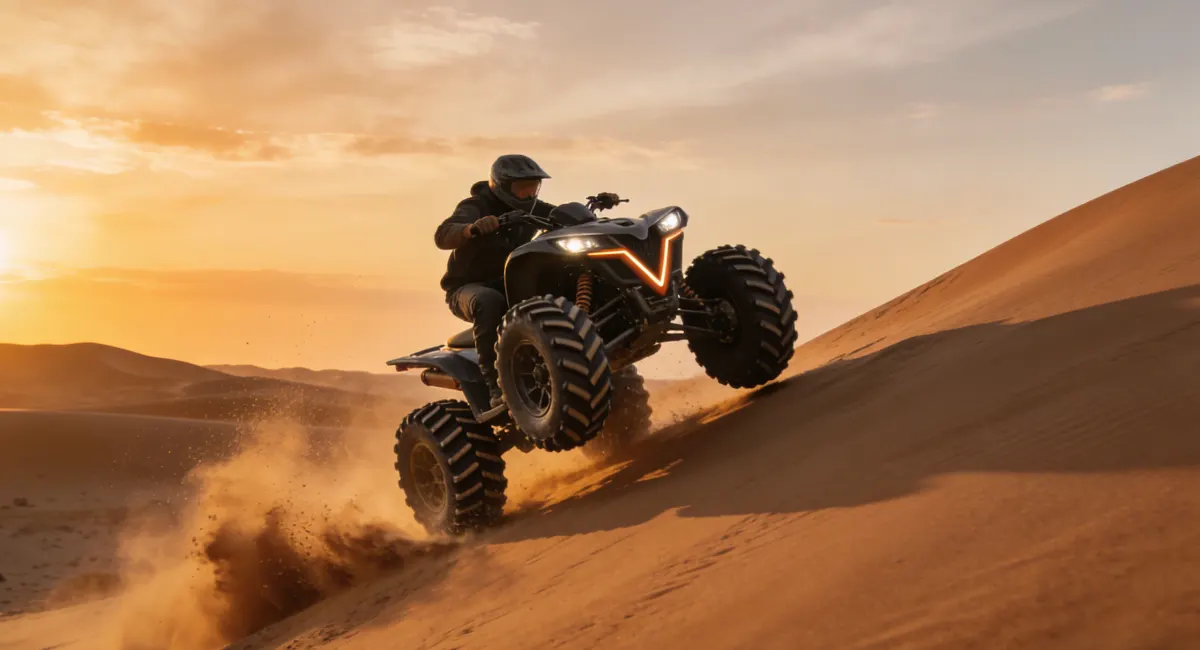
A significant characteristic of the wild is that it maintains untouched beauty. A sandy hill and dune system provides a wild and beautiful environment that allows for creative play. sustaining this artistic beauty provides significant challenges for the off-road vehicle. In this setting, the balance of the vehicle is thrown off without warning. All-terrain and knobby tires turn into aggressive self digging and finally succumb to the lose of sand. In conquering this sandy terrain, we use the quad paddle tires . It conquers and reshapes the flexible playground. it is a engineering and design product that is meant to provide complete control in the dense and poorly balanced sand dunes. This is a quad sand tire . In this guide, we will simplify the different processes of using a quad sand tire and design the simplest guide possible for using and mastering the quad paddle attachments. This will provide the optimatl upgrade to sand dune riding.The reason quad tires fail with sand is the physics of failure.
Understanding the genius of the quad paddle tire requires one to appreciate the sand itself. Deep, loose sand is not a solid. It is far less like a solid. It lacks the firm, stable purchase that a traditional tire requires in order to generate tractive force. A standard knobby tire is configured for penetration. It is made to bite into firm dirt or loamy soil. However, in sand, this particular design is a monumental blunder.
The lugs on a standard tire do not encounter a solid base layer when spinning in sand; rather, they function as dozens of miniature shovels attempting to scoop out sand directly underneath the tire, with no forward motion created in the process. Instead, a hole emerges that continues to deepen as the quad sinks deeper into the loose sand. Eventually, the frame and skid plates hit the sand, and all forward motion ceases. At this point, all the engine does is sand-flying, attempting to dig the quad out. The outcome: a machine that is completely stuck and a rider that is fully exasperated. This is where paddle tires come in. They redefine the science of traction in loose materials–a problem that stems from the very fundamentals of physics.
The Engine of the Dunes: Anatomy of the Rear Quad Paddle Tire
The rear paddle tire has no competitor when it comes to conquering sand dunes. It is the powerful engine that propels your quad across the dunes. Its aggressive, unmistakable design is a perfect example of form following function. It does away with the traditional concept of tread blocks. It replaces them with large, powerful scoops, or paddles, that serve to capture and violently eject sand rearwards. It is the scooping action that creates the thrust that launches your quad across the sand. Understanding the anatomy of this tire is the first step to understanding its effectiveness.
The Power of the Paddle Count, Depth, and Shape
The paddles and scoops are the most critical features of the tire. The height, angle, shape, and number of these paddles are all meticulously engineered variables. Design features do not stand alone. They are considered in context of how the tire performs with a given quad.
The quantity of paddles formed on a tire often serves as a fundamental characteristic that needs special and careful attention. It is possible for a tire to have fourteen paddles. This count should be synchronized with the quad's ability and drivetrain. A lesser-powered quad simply aspiures and needs less paddles. This is done so that the engine can freely and easily spin the tire and then attained its target optimal powerband to avoid being bogged down. Inversely, a Yamaha Raptor 700 is a high powered and high torque machine and therefore, needs a greater paddle count. More paddles for the tire would be more efficient because the engine's massice torque would then be translated to forward attening and motion, rather than to excessive and unneeded wheelspin.
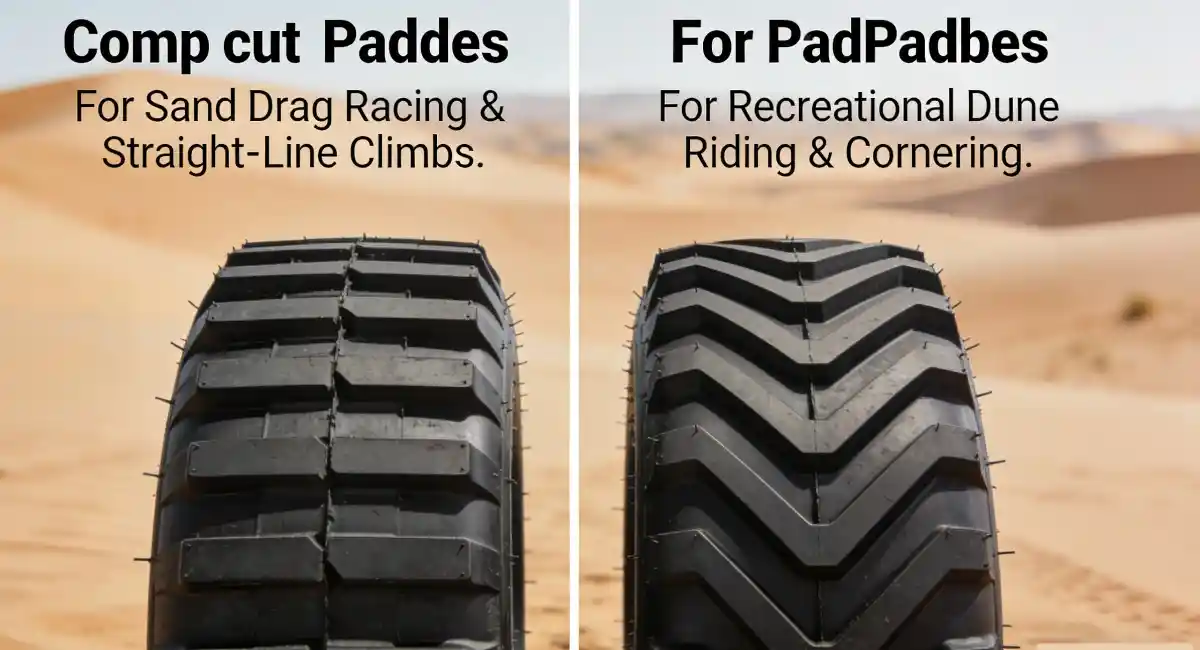
The shape of the paddles is also a critical factor in performance. There are two primary designs. Straight paddles , also known as comp cut or hauler paddles, run directly across the face of the tire. This particular design ensures the absolute maximum straight line bite and is the preferred choice of professional sand drag racers. In pure and straight up the hill climbing competitions, this is the best option for the rider. It, however, comes with a sacrifice, which is no ability to sideways grip on cornering.
For recreational dune riding, a tire with V-shaped or staggered paddles has significantly greater versatility and tends to be the preferred option. In these configurations, the paddles are arranged in a chevron or V-pattern. Such a configuration still permits good forward momentum. However, the orientation of the paddles in a chevron arrangement also yields a considerable amount of lateral propulsion. Thus, the operator of the quad can steer the vehicle sideways. They can slice through the enormous bowls of the dunes far more efficiently and with greater finesse. There are quad duners. They would attest the V-paddle design offers the optimal and most practical balance of performance.
The Carcass: Lightweight and Flexible for Flotation
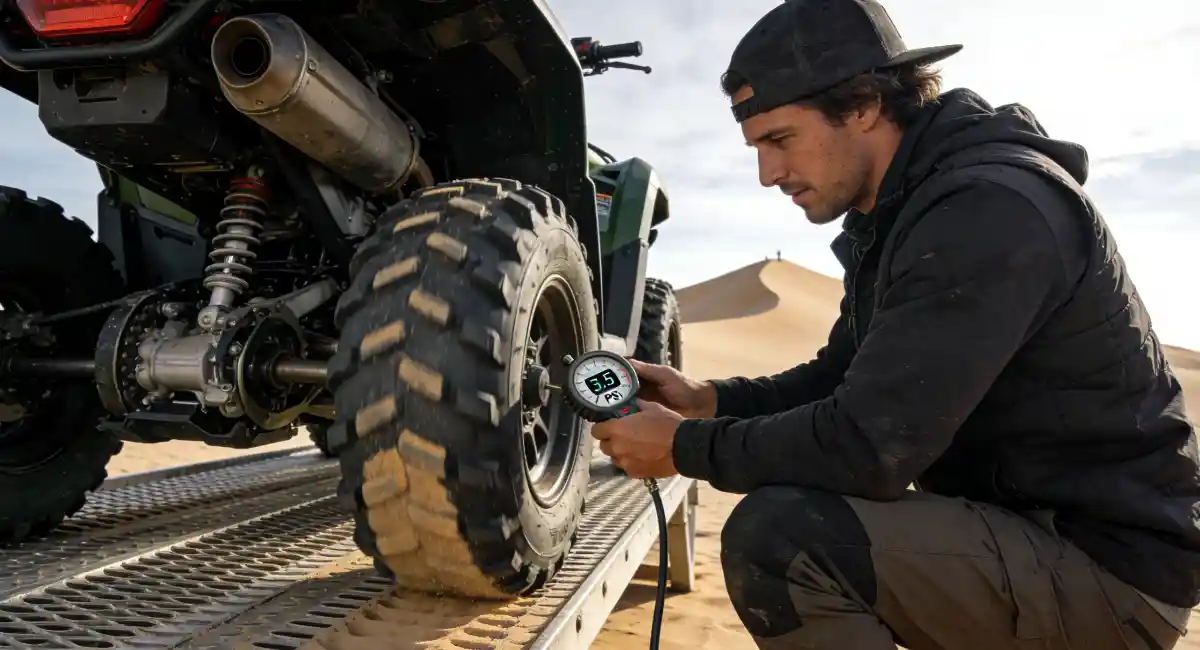
The carcass of a quad paddle tire has an equally specialized. Its internal structure is designed to be very light as well as having a high degree of flexibility. Such flexibility is a necessary performance trait. It enables the tire to deflate owing to very low air pressure. With air pressure in the tire set low, the quad’s tires deflate and create a relatively broad and long contact patch with the sand. With a greater contact area, the weight of the quad is better distributed and hence, provides better flotation. This is what allows the machine to stay on top of loose sand.
The construction also greatly minimizes the tire’s rotating mass which also positively improves performance. The tire’s weight is more easily spun by the engine which results in faster acceleration and a more responsive feeling. It clearly also reduces the amount of strain placed on the quad’s clutch and axles.
The Rudder of the Ship: Understanding the Front Quad Sand Tire
The rear paddle tires deliver the explosive power, but the front sand tires provide the essential control and steering. It is a common and dangerous mistake to use your stock front knobby tires in the sand. The sharp lugs on these tires, designed to grip the earth, cause the front wheels to sink in sand in an unpredictable manner. This is known as “knifing” or “plowing” and can cause the front end to tuck or push suddenly and without control. Specialized front sand tires promote flotation and control in a way that minimizes the chances of losing control.
The Ribbed Front: For Precision Steering
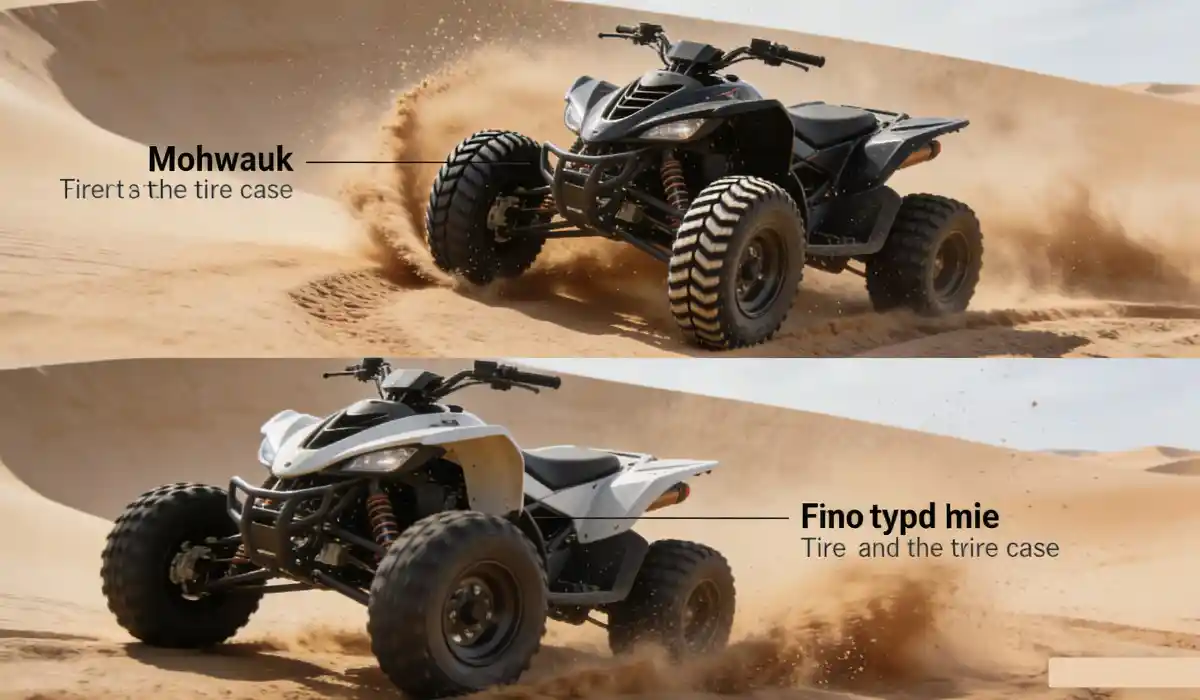
With the raised ribs and outstanding riding performance, the most successful and adaptable variety of front sand tires has one or more prominent ribs running down the middle. The construction is typically called a “Mohawk” or “Razor” tire . The raised ribs focus the flow of the sand – they almost act as rudders. This offers the tire an edge and the driver a greater sense of steering. This sense of steering offers the driver a greater feeling of control and more precision. It enables the driver to initiate turns with more confidence. It also allows the driver to carve and ride down a dune in a more smooth and predictable manner. For dune riding in general, the more reliable and safer form of riding where turning and control are prioritized, a ribbed front tire is the optimal choice.
The "Smoothie" Front: For Minimal Drag
The other main option for a front sand tire is the "smoothie" . It is a tire that is completely bald, having no treads, knobs, or ribs. It is designed to give the smoothest glide over sand by maximizing flotation while minimizing drag. It is preferred by sand drag racers who value reduction of resistance the most. The major downside with a smoothie is that it drastically reduces steering feel and precision. The front end may feel vague and wander at lower speeds.
The Matchless Extravaganza: Choosing the Ideal Paddle Tires for Your Quad
The energies complemented by quad paddle tires have only one portrait - to have the right set which would match the dune machine. The other side would have frustrating. Untamed tires as some say proves to have the entire opposite wreaking an outstanding quad. The quad is drastically powerful due to immense paddle tires which on the other side verifies responsiveness tailored which the dunes conditions.
Matching Paddle Count to Engine Power
The rear tires’ paddle count must be balanced with the engine output for seamless performance. These tires must be determined with caution.
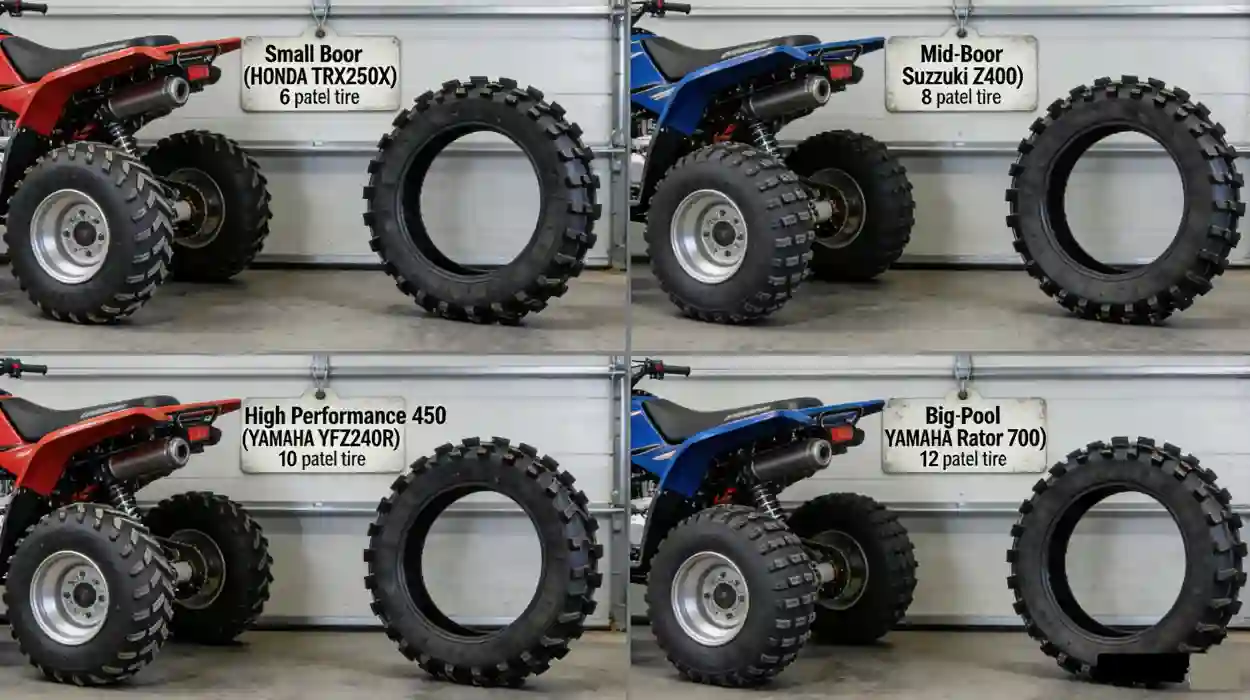
Small Bore Quads (e.g. Honda TRX250X, Yamaha Raptor 250): These lower powered machines work best with tires with 6-8 paddles as it mounts the engine with an optimal range in no time.
Mid-Bore Sport Quads (e.g. Honda TRX400EX, Suzuki Z400): 8 paddles captivates machines with responsiveness as the ratio of hook-up along with the engine is met.
High-Performance 450s (e.g. Honda TRX450R, Yamaha YFZ450R). These machines that are built for racing and have the ability to flex to a certain degree, can handle and support an 8-10 paddle tire. A stock 450 performs optimally with 8 paddles whereas a fully built race motor will efficiently perform with 10 paddles.
Big Bore, High-Torque Quads (e.g. Yamaha Raptor 700). These monsters that have super high torque usually have a 10-12 paddle tire to reduce excess wheelspin. A 10 or 12 paddle tire is usually the ideal range for these monsters.
Taking into Account Your Driving Style, Behavior, and Terrain
How one operates an ATV is as vital and as important as which vehicle one has. The conditions of ATV riding are stern for a leisure dune explorer and a competitive racer. For someone that is a enthusiastic duner and enjoys spinning through bowls and discovering a land, a V-paddle rear and ribbed front of an ATV is the best choice for overall versatility. It gives superb control that is also incredibly fast in addition to helping the driver feel confident.
Your approach changes for instance in haste vertical acceleration and climbing. For grudge racing up the biggest hills, the winning combination is a straight-paddle "hauler" rear tire and a smoothie front . It is designed for maximum acceleration and designed for minimum drag. It is cornering ability is supior to normal straight line acceleration.
Send us an inquiry and our sales team will reply within one business day
Contact Us