Motorcycle Tube and Tire: Critical Facts Every Rider Must Know!
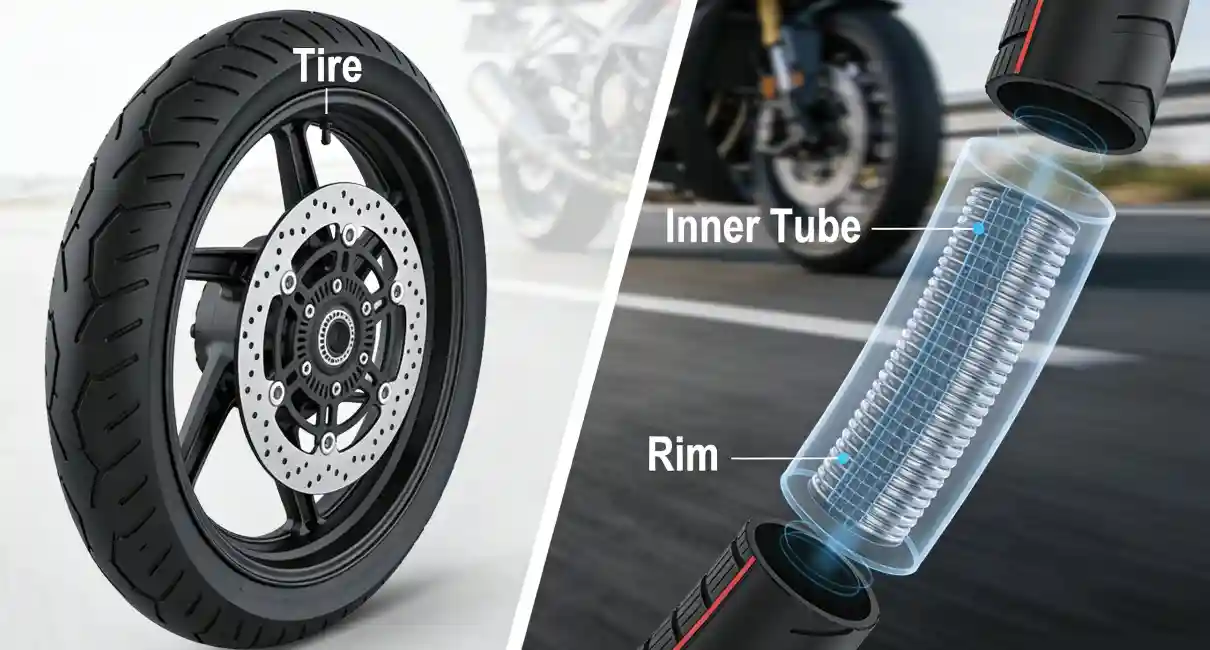
What’s up, cyclists! For real, the most important aspects of a motorcycle are its roaring engine, shiny chrome, and the possibility of an open road. Beyond all the thrills, that basic foundation of the whole motorcycle system is the motorcycle tube and tire (or just the tire in a tubeless system ).
This may seem like a little detail, but understanding the distinction between these systems is not just a matter of trivia. It matters for your safety , your bike's performance , and even for your considerations whenever you're hundreds of miles away from home.
1. Introduction. The Dynamic Duo Beneath your Ride of a Bicycle
So, what is the problem about your tire with air and the one with a tube? Well, it determines how your tire contains air, how it manages a puncture , what type of rims can be used, and even the type of riding it is designed for. It is like comparing a stereotypical bicycle tire with inner tube and a modern car tire that seals directly onto the rim of the wheel. Different designs, different advantages, and different things to think about.
1.1. Why we need to talk about tires AND tubes
Tires and tubes have an indispensable relationship. Many motorcycles, particularly older ones, off-road bikes, and those with classic spoked wheels, have inner tubes . These ones need tubes to operate. The tube holds the air, and the tire provides the tread, the sidewalls, and the shape. Take the tube away, and the tire won't be able to hold air. It is a relationship that is ancient and comes with rules of its own. It is that relationship, its reason for existing, its value, and the value for you that we will analyze.
1.2. A quick mention of tubeless tires: The other side of the coin
The inner tube tire is not a universal concept for all motorcycles. Most modern streetbikes, sportbikes, and touring bikes make use of the tubeless tire system . The tire and rim of the wheel, like all other tubeless tires , make an airtight seal with each other, and there is no need for a separate inner tube . The system has become the standard for good reasons, which we will analyze thoroughly. But for now, let’s focus on the classic setup and tubeless: why are they are still thriving in the corners of the motorcycling world?
2. Understanding the Tube-Type System: A Classic Approach
Let’s begin with the traditionalists. Bikes that have been traveling down roads and trails for years, with an inner tube within doing its work. This method is simple and effective, and it’s critical to grasp how it works.
2.1. The Inner Tube: What Is It and Why Is It There
An inner tube is, essentially, a balloon filled with the compressed air that assumes the form of a ring when blown. The tube is encircled by the tire and sits within the dense casing of the outer tire. The tire maintains the structure and the contact patch while the tube provides the cushion there is to be and the air retention, this works like a balloon within a rigid outer container.
2.1.1. Material Matters: Butyl vs. Natural Rubber
Inner tubes are generally made of
This is the most used material for inner tubes today. Butyl tubes are quite effective in holding the air pressure for extended periods, meaning the frequency with which you have to pump the tires is considerably lowered. In addition to this, they are also cheaper and are more tear resistant.
Natural Rubber : Once considered the dominant elastic material for tubes due to their beautiful flexibility and lightness, now the tubes are considered obsolete. These tubes are more elastic and are therefore, much harder to puncture, even from pinch flats. These tubes lose their pressurization much more rapidly than their Butyl counterparts and therefore require frequent supervision. For more serious off-road riders, the increased elasticity might be much more advantageous than the expense of air retention.
2.1.2. Valve Stems: The Lifeline of Your Tube
Every inner tube has a valve stem which is a mechanism for taking air in and out. These stems are a mixture of brass and rubber which are directly bonded to the tube. There are generally two types:
Schrader Valves : These are the same type found on car and bicycle tires, wide and robust. They’re common on most motorcycle tubes.
Presta Valves : Thinner and typically found on high-performance bicycle tires, less common on motorcycles.
The valve stem must pass through a corresponding hole of your wheel rim. A valve which stem from the tube must be thick enough and stem hole of the rim must be thin enough. Although small in size, without such small details, proper inflation and sealing cannot be established.
2.2. The Tube-Type Tire And Its Companion Design
A tube-type tire is specifically constructed to be used with an inner tube . Its internal architecture and distinctly its bead construction are not the same as a tubeless tire .
2.2.1. The Tube-Type Tire Difference in The Bead Construction
The bead of a tire is the reinforced edge that sits against the rim. On a tube-type tire , the bead doesn’t need to form an airtight join with the rim. rather its main purpose is to tether the tire to the wheel and in that regard, the bead wires may be less rigid and the rubber compound around the bead does not have to be designed to form an airtight seal. If you ran a tube-type tire without a tube, you would find that the air would simply leak out through the beads.
2.2.2. The "Tube Type" (TT) Marking
Check the sidewall of your tire first. If you see the marking “TT” or “Tube Type” , that tire absolutely requires an inner tube to hold air. If you leave the inner tube out as denoted by that marking, you are very likely to get the tire burnt out and maybe injured too.
3. When and Why We Use Tubes: Common Applications
3.1 Spoked Wheels: The Traditional Home of the Tube
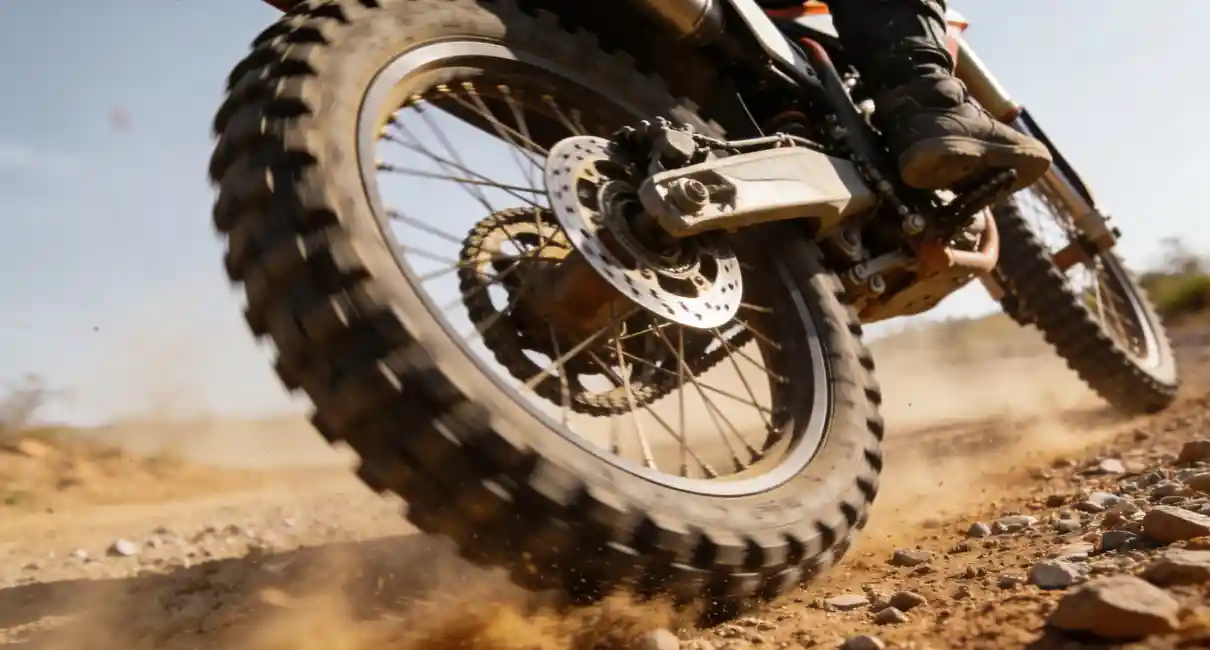
This is probably the most common reason. Traditional spoked wheels have holes in the rim where the spokes pass through and are attached. These holes make it so the rim cannot hold air on its own. It is for that reason an inner tube is needed to contain the air pressure. Many classic bikes, custom builds, and off-road bikes proudly sport spoked wheels. This means they are inherently tube-type setups .




Send us an inquiry and our sales team will reply within one business day
Contact Us