Golf Cart Tyre For Sale: Your Perfect Complete Guide
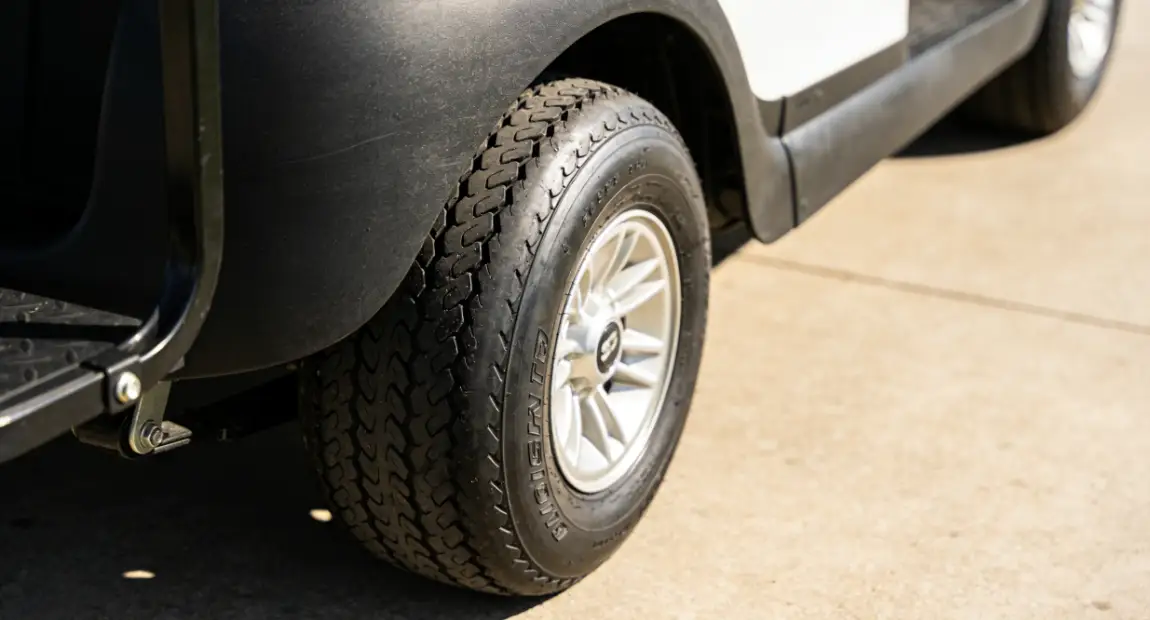
Golf carts, once strictly for country clubs, now have a many roles to play. You can find them being used in gated communities, on university campuses and even in light-duty industrial sites. However, in the marketing spiel folks just rave about the powerful motors, the comfortable seats, and the flamboyant colors that any golf cart comes with. But what many folks often forget is the most important part of any golf cart - the tires . When it comes to comfortable and long rides, with maximum energy efficiency, the right tires can make a world of a difference. With so much variety to pick from in the market, it can certainly be overwhelming. In a bid to make your purchasing decision as easy as possible, this in-depth guide is intended to shed light on the world of golf cart tires so that you can make a smart decision based on your required mobility and your surrounding conditions.
Parts of a Golf Cart Tyre: More Than A Piece Of Rubber
Before you type ‘golf cart tyre for sale’ on any search engine, it is vital that you understand that each tire has some internal parts, and each part has a purpose that it serves. These parts make the market for golf cart tires so complex.
This is the part of the tire that first touches the road, and is the most external layer of the tire. The design of the grooves, sipes, and blocks, dictate the amount of traction, water displacement, and noises. Each specific design is engineered for different surfaces, which include smooth asphalt and loose gravel.
This vertical layer is located between the tread and the bead. It gives the tire its shape and construction, while also, supporting the weight of the vehicle and providing impact absorption. This is also where you will find the size of the tire, the load and ply ratings.
The inner most edge of the tire that tightly connects to the wheel rim is known as the bead. It is strengthened by the metal wires and creates an airtight seal, which helps to avoid air leakage and keeps the tire in place.
The main part of the tire is known as the ‘Carcass’, and is made of multiple layers of fabric, which include polyester and nylon, submerged in rubber. This is the most important layer, as it gives the tire its shape, strength, load carrying capacity, and puncture resistance.
Belt (for radial tires)
Radial tires have a layer of steel or fabric belts under the tread. Belts under the tread help the tire improve stability while improving handling and providing a comfortable riding experience. Unlike radial tires, bias-ply tires do not have a belt layer.
Demystifying Tire Specifications: What Do All These Numbers Mean?
As you search “golf cart tires for sale,” you may notice series of numbers and letters along the sidewall of the tire. These markings contain important information that can help you determine which tire will suit your cart.
We will use the example of 205/50-10 for our explanation.
205 : The first number is the section width of the tire expressed in millimeters. In other words, the section width is the dimension of the tire from one sidewall to the other.
50 : The next number is the sidewall aspect ratio. The sidewall height is 50% of the tire width, or 205mm. Usually, the lower the aspect ratio, the sidewall is shorter. A tire shorter in sidewall will give you sharper handling, but the ride can be unforgiving. A tire with a higher ratio will be more forgiving and give you a better ride, but add to the sidewall height.
- (dash) or R : Usually, the “-” denotes a bias-ply and the “R” means the tire is radial. More on that in the next section.
10 : The dimensions in inches of the wheel rim to which the tire is designed to fit is indicated by this number (10). As with the wheel diameter, confirm the other wheel dimensions before wheels are purchased to make sure they are compatible.
Consider the other important specifications like the:
The tire's strength and ability to carry weight is measured by the ply rating. The strength of the tire indicated by the ply rating is not the actual number of plies, rather an index. The robust the tire is, the less easily it is punctured and the heavier the load it is able to carry. While golf carts lite-duty ply rating is 2, it may reach even 8 ply for heavy-duty utility carts designed for rough terrain.
Each tire has an unique alphanumeric code that corresponds with its load index to signify the maximum it can carry. To know its weight capacity, refer to the load index chart.
For golf carts, the pneumatic tires are among the lowest rated in comparison to other vehicles. This is because most golf carts are out-fitted with low speed motors. However, it is still an important consideration when operating the cart on public roads where speed limits are less than that of passenger vehicles.
Look at the tire and see if there is a DOT stamp on it. This DOT stamp indicates the tire meets the safety standards set by the Department of Transportation. This is equally crucial if you are going to use the golf cart on the roads (as legally allowed if the golf cart is fitted with the needed safety features and still is a golf cart).
Bias-Ply vs. Radial: The Great Construction Debate
One of the first and biggest difference in trying to "buy golf cart tires" is bias ply construction and radial construction. Each of these types of tires has their unique pros and cons.
Construction: the layers of fabric (plies) run diagonally from bead to bead and crisscross.
Pros: Usually much cheaper. They have a stiffer sidewall which is better for on the side of uneven terrain. They are less easily sidewall punctured because of the construction. They conform to bumps in the road.
Cons: They create more heat if going at faster speeds which leads to faster wear. The ride is less comfortable and the handling is less precise compared to radials.
Best for: Standard use in golf courses, Utility golf carts that are heavily laden and drive at slower speeds, and anyone who wants to save money.
Construction: Unlike other tire designs, the plies in radial tires run perpendicular to the direction of movement. These tires generally also have a layer of steel or fabric belts beneath the tread.
Pros: Radial tires provide a smoother ride, better gas mileage, better traction (especially in wet conditions), longer tread life, great handling because of the independent flexing of the sidewall and tread, and the ability to generate less heat.
Cons: These tires are more expensive, and because the sidewall is softer, sidewall punctures are more of a risk (though this is less common with golf cart tires than with passenger car tires).


Send us an inquiry and our sales team will reply within one business day
Contact Us